
Disclaimer:
The perspectives and opinions expressed in this article are my own personal views. They do not represent or reflect the views, strategies, positions, or affiliations of my current or past employers, colleagues, business partners, or any professional organizations I am associated with. This content is shared purely in an individual capacity.
AI specs are about to redefine computing — radically and permanently. As voice AI models continues to mature and humans move toward directing autonomous AI agents instead of performing the work themselves, the interface that understands the most context wins.
And that interface won’t be a PC.
It won’t be a laptop.
It won’t even be a phone.
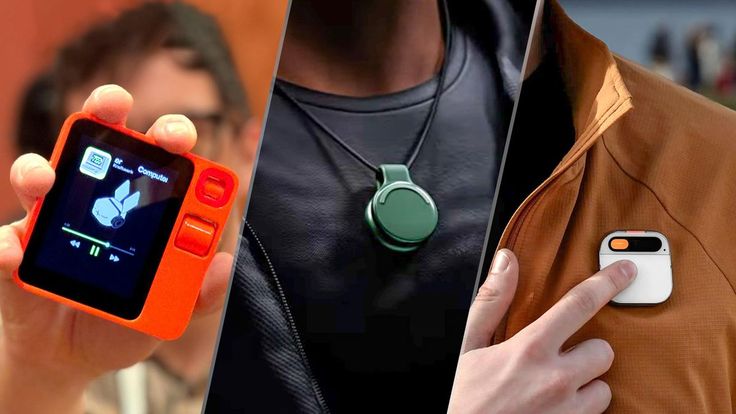
It will be the AI wearable — specifically, AI specs.
Unlike AI PCs, which remain powerful but isolated computing hubs, AI specs merge digital reasoning with physical reality. They continuously see, hear, and sense what we do, fusing human intention with ambient awareness in a way that makes traditional screens feel blind and disconnected.
This shift marks the beginning of embodied AI dominance.
The Current Reality: AI PCs Still Rule — But Only Digitally
Right now, AI PCs are master orchestrators for digital workflows. They analyze email threads, summarize documents, rewrite code, generate financial models, and automate SaaS tasks with speed and precision.
But their context begins and ends inside the machine.
They don’t know where you are.
They don’t know what you’re doing.
They don’t know what you see.
They don’t know your heart rate, your environment, or your physical state.
To them, you are a digital profile, not a physical human.
This means every meaningful interaction must be initiated manually: typing, clicking, navigating, specifying, clarifying. Even the most advanced AI PCs wait for instruction — reactive instead of intuitive.
AI Specs: Embodied Intelligence With Continuous Context
AI specs, by contrast, are the beginning of a computing model that lives with us — not near us. Sensors like vision, GPS, microphones, biometrics, and environmental awareness form a continuously updating understanding of our moment-to-moment reality.
They don’t just know what we want — they know why we want it.
They see what we see.
They hear what we hear.
They notice patterns we miss.
They interpret tone, motion, energy levels, even mood.
And as the next generation of voice-first AI models emerge, this continuous stream of context becomes the critical advantage.
Because soon, we won’t be typing instructions into computers.
We’ll be speaking them into existence.
And the system that understands our context best will produce the best results fastest, with the least effort.
A Simple Example: Chicken Biryani and the Indian Sweet Shop
Imagine this moment:
You’re eating chicken biryani for dinner, wearing AI specs that are continuously aware of your environment. The vision model sees your plate. Audio confirms the conversation at the table. GPS knows your location.
When you finish your meal, you simply ask the voice model through your specs:
“Where’s a good sweet shop nearby?”
AI specs respond with instant intelligence.
They know you just ate Indian food.
They know your exact location.
They know the lighting, time, temperature, and how far you’re willing to walk.
They even know your glucose level and how much you have moved today.
So they answer:
“There are three Indian sweet shops within 2 miles. The closest is open and has great reviews for gulab jamun.”
No clarification needed.
No typing.
No pulling out your phone.
No specific keywords like “Indian sweets.”
Now picture trying to do that same request on an AI PC or even a phone.
You’d need to say:
“Show me the nearest Indian sweet shop nearby.”
Why?
Because the device has no idea you just ate biryani.
No idea you’re outside.
No idea what city you’re in.
No idea what you’re craving.

Context creates intelligence.
Context creates relevance.
And AI specs will own context.
Today’s Use Cases: Early Signals of Future Dominance
Right now, AI specs are already starting to outperform PCs in areas like:
- Navigation: Specs layer directions into reality and adjust them dynamically as you move.
- Fitness: They analyze motion, form, posture, and biometrics in real time.
- Micro-learning: They surface knowledge in the moment you need it, not the moment you search for it.
- Hands-free computing: Voice commands + contextual awareness = immediate engagement.
AI PCs are still superior for large-scale generative tasks — coding, modeling, document operations — but specs are becoming the gateway for immediacy, embodiment, and environment-linked decisioning.
The Future: Humans as Directors, AI Agents as Workers
Voice models are evolving fast. Soon, we won’t give detailed instructions at all — we will simply state outcomes.
Instead of typing:
“Summarize this document, rewrite sections 2 and 6, convert to PDF, and email to Remya.”
We’ll say:
“Handle this.”
And the AI agent will run the workflow.
In the future, the PC doesn’t disappear — but it becomes a worker node. Specs become the command center.
Specs give direction.
PCs perform the heavy lifting.
The human becomes the CEO of an ecosystem of AI agents.
Specs become the nervous system.
PCs become the muscle.
Where AI Specs Go Next
By the end of this decade, AI specs will:
- Run on-device small language models for near-instant reasoning
- Offer all-day battery life
- Understand continuous visual context
- Enable silent, private voice control
- Reduce friction to near-zero
- Replace phones as primary personal computing
- Federate compute across devices, including PCs
- Become the interface for autonomous personal agents
PCs will remain powerful execution engines — but intelligence will move to the wearable layer.
Because the interface closest to you becomes the interface that understands you.
Conclusion
AI PCs unlocked digital productivity.
AI specs will unlock human productivity.
In a world of autonomous AI agents, the winners won’t be the devices with the fastest chips — they will be the devices that know what we want without us needing to explain it.
And only AI specs can do that.
The computing paradigm of the future isn’t screen-based.
It isn’t workflow-based.
It isn’t app-based.
It’s context-based.
And context lives on your body, not on your desk!